 Faris
Faris
Here is the question nobody actually answers when they hand you a list of “small business ideas.” What is the actual cost to start a small business from home? Not “not much,” not “less than you think.” An actual number, because you have a real budget and a real risk tolerance, and “not much” doesn’t tell you if this is a $40 weekend experiment or a $600 bet on yourself.
Most small business idea lists are written to be inspiring. This one is written to be useful. Two businesses, both with real, current search demand behind them, each broken into exactly what you’d need to spend before you could list your first item for sale.
Short answer: Both businesses on this list can start for under $100. The real cost isn’t the materials, it’s the platform fees that eat into every sale you make afterward, and that number is usually the one people forget to check first.
Why Focus on the Cost to Start a Small Business From Home First?
The first number that matters isn’t what it costs to start. It’s what it costs to find out if anyone will buy what you’re making. A $40 batch of materials that sits unsold teaches you more than a $400 batch that also sits unsold, at a tenth of the risk.
That’s the logic behind every cost estimate below: the minimum viable version, not the “if you want to do this seriously” version. You can always spend more once you know something’s working.
2 Small Business Ideas, Real Costs Included
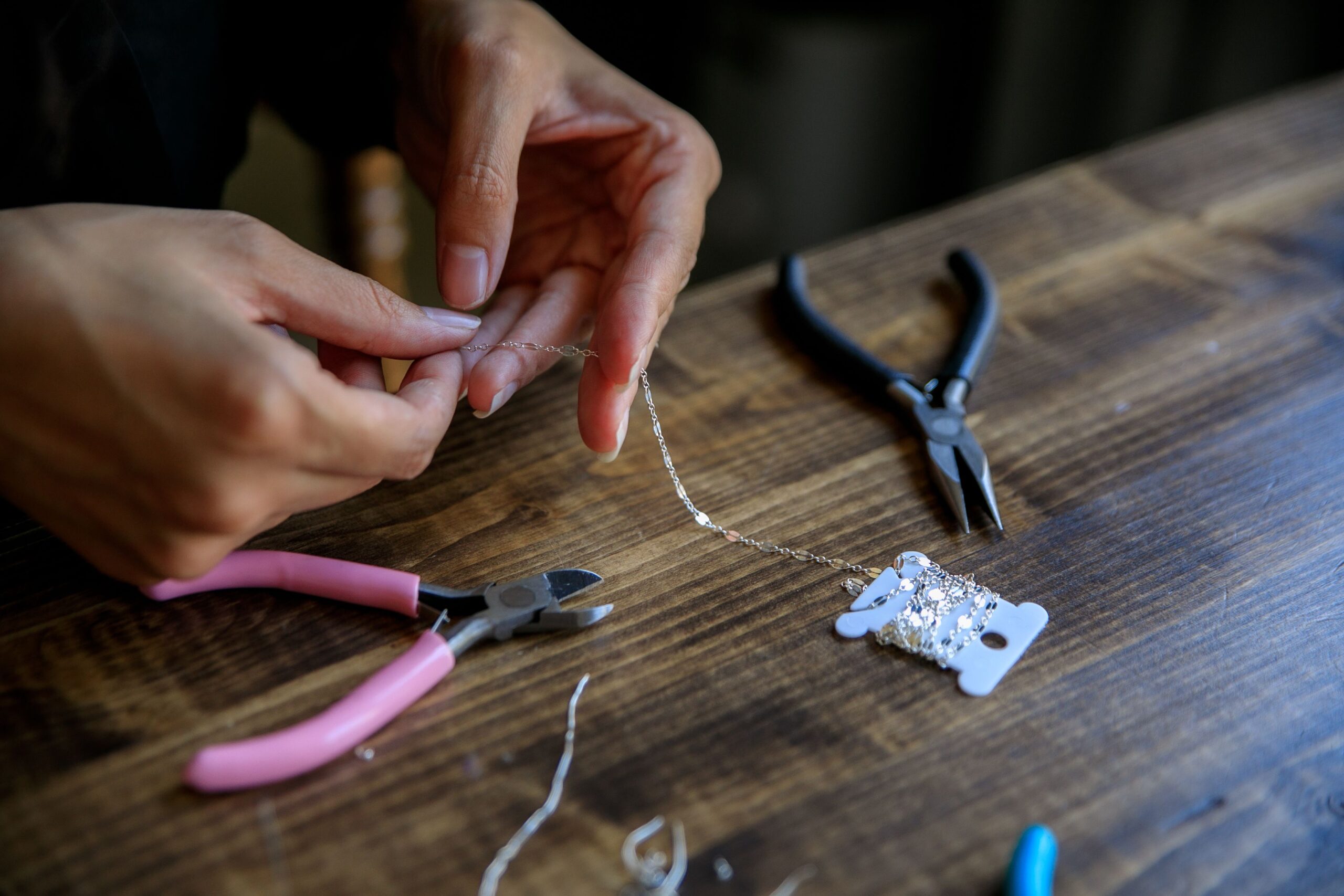
1. Handmade Jewelry
Starting materials (wire, beads, clasps, basic tools): roughly $30 to $60 for enough supplies to make 8 to 10 pieces. If you sell on Etsy, you’ll pay $0.20 to list each item, a 6.5% transaction fee on the price you charge (including shipping), and a 3% plus $0.25 payment processing fee on US sales (see Etsy’s official fees policy). Total to list your first 10 pieces: around $50 to $70, before those per-sale fees start applying.
This isn’t a fringe hobby either. The global handmade jewelry market was valued at $151.5 billion in 2022 and is projected to reach $472.5 billion by 2032, growing at roughly 11.9% a year (see Allied Market Research’s handmade jewelry market report).
2. Reselling Business
This is the lowest floor on the list if you’re starting from your own closet: $0. Beyond that, sourcing inventory from thrift stores runs $5 to $15 per item you plan to resell. On Poshmark, one of the most popular resale platforms, the fee is a flat $2.95 on any sale under $15, and 20% of the sale price on anything $15 and up (see Poshmark’s official seller guide). Selling platforms take a commission per sale rather than charging upfront, so your real cost is inventory only. Budget $50 to $100 to source your first batch of 10 to 15 items.
The resale market itself is growing fast too: the global secondhand apparel market is projected to reach $393 billion by 2030, expanding roughly twice as fast as the overall apparel market (see ThredUp’s 2026 Resale Report).
Where to Find Ideas, Sell It, and Promote It
These are three different jobs, and mixing them up is one of the more common early mistakes. Finding an idea is figuring out what to actually make or source. Selling is where the transaction happens. Promotion is what gets a stranger to click through to that listing in the first place. You need all three, and they’re rarely the same app.
Where to Find Ideas
Before you spend a dollar on materials or inventory, spend ten minutes seeing what’s actually selling right now. For handmade jewelry, Etsy’s own trending and bestseller sections inside a category show you which styles are moving currently, not what moved two years ago.
Pinterest search suggestions and related pins work the same way: type in a style you’re considering and the autocomplete shows you what people are actively saving and searching for.
For reselling, the goal isn’t invention, it’s spotting demand that already exists. Poshmark’s trending tab and Depop’s TikTok-heavy community both surface which brands and styles are reselling fastest. Thrift store racks and estate sales are still the best place to learn this hands-on.
Pay attention to what other resellers around you are actually picking up, since experienced sourcers tend to cluster around genuinely valuable items. Reddit communities built around jewelry making and resale are also worth browsing before committing to a first batch, since real practitioners tend to be blunt about what didn’t sell for them.
Where to Sell
Handmade jewelry: Etsy is the default starting point since its search traffic is already full of people looking specifically for handmade pieces. Shopify is the next step once you have repeat buyers and want to skip the per-sale transaction fee, though you’ll need to bring your own traffic to it.
In-person craft fairs and local markets are worth it too, mainly because watching a stranger pick up and consider a piece teaches you more about pricing and design than weeks of online data.
Reselling: Poshmark is the most beginner-friendly option and has built-in social sharing baked into the app. ThredUp will photograph, list, and ship items for you, which is convenient, but it takes a larger cut in exchange.
Depop skews younger and leans on a more visual, TikTok-adjacent audience. Facebook Marketplace charges nothing and works well for local, no-shipping sales, though your reach stays limited to your area.
Where to Promote
Instagram, TikTok, and local Facebook groups all work for getting eyes on a listing. But for both of these two ideas specifically, Pinterest deserves a spot at the top of that list, and the reason is in the numbers, not just the vibe.
Handmade jewelry held a Pinterest search interest score of 70 to 100 for three straight months with barely any dip, and 85% of the people searching it were women. Reselling searches told a similar story but moving faster: interest climbed from 65 to 100 over that same window, with 71% of searchers also women (see Pinterest Trends).
That’s a steady, high, female-skewing search pattern for jewelry, and a fast-rising one for resale. Both point the same direction.
That matters because Pinterest’s own user base already skews toward the exact people searching for these two ideas. A pin that ranks well there shows up in front of people who were already looking for it, not people you have to convince from a cold start.
Practically, that means one pin per listing or per platform, linking straight back to your Etsy shop or Poshmark closet, with the cost or fee breakdown above doubling as a hook in the pin’s headline.
The Fee Nobody Mentions
Startup cost gets all the attention. The number that actually determines whether you make money is the ongoing fee, and it’s different for every platform.
Etsy takes a transaction fee plus a payment processing fee on every sale: 6.5% of your listed price plus shipping, plus 3% and $0.25 per US transaction, stacked on top of the $0.20 you already paid just to list the item (see Etsy’s fees policy). Poshmark takes a flat $2.95 on sales under $15, and 20% on anything $15 or higher (see Poshmark’s seller guide). Facebook Marketplace and local sales take nothing, but cost you the platform’s built-in audience.
This is the number that decides your real margin, not the startup cost. A $50 startup budget on a platform with high ongoing fees can end up less profitable than a $150 startup budget on a platform that takes almost nothing.
A cheap business you can’t afford to keep listing on isn’t actually a cheap business. It’s a business with a hidden second bill.
ClockOut
Which One Actually Fits Your Budget
Under $50 to start: Reselling from your own closet.
$50 to $100 to start: Handmade jewelry, or reselling with a sourced starting batch.
Pick based on the number you can actually lose without it mattering, not the one with the best-sounding profit margin. The businesses that fail usually don’t fail because the idea was bad. They fail because someone spent more upfront than they could afford to lose while still figuring out if anyone wanted to buy.
Frequently Asked Questions
Do I need a business license to start either of these from home?
Requirements vary by state and city, and by how much you’re selling. Most people testing an idea at this scale operate as a sole proprietor without a formal license at first, but check your local requirements before scaling past a hobby level.
Which of these has the better profit margin?
It depends more on your sourcing than the business type. Reselling has a lower floor if you start from your own closet, but margin shrinks once you’re paying for inventory. Handmade jewelry has a more predictable margin because your material cost per piece stays fairly constant.
Can I really start for under $50?
Yes, with reselling from your own closet, since it doesn’t require buying new materials before your first sale.
The Bottom Line
This article provides general information, not individualized financial or business advice. Startup costs, fees, and requirements vary by platform, location, and business structure. Results depend on your skills, time, and effort. This article was drafted with the assistance of AI, but 100% reviewed and refined by a human.
The real question was never “what’s a good small business idea.” It’s “what can I afford to lose while I find out if this one works.” Start with the number you’re actually comfortable risking, not the one that sounds most impressive.
Admin
Leave a Reply